Monthly Archives: March 2026
Want to Open a Cafe? Start With Wing Night Wednesdays
You want to open a place to eat in your small town. Maybe a coffee shop, a little cafe, a bakery. You’ve been thinking about it for months, maybe years. But you’re not sure if enough people will come. You don’t know what they’ll actually order. You’re not certain you can handle running it day […]
You want to open a place to eat in your small town. Maybe a coffee shop, a little cafe, a bakery. You’ve been thinking about it for months, maybe years.
But you’re not sure if enough people will come. You don’t know what they’ll actually order. You’re not certain you can handle running it day after day.
Here’s how to find out before you spend serious money: borrow the community hall and start testing.

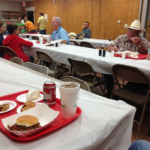
The county fair dinner is not a bad model for trying out a restaurant concept in a small town. Photo by Becky McCray
Try Wing Night Wednesdays (or make it your own)
At the Canadian Beef Industry Conference, a couple from a town of just a few hundred people mapped out their action on one of my postcards:
- Gather our crowd in our community hall for Wing Night Wednesdays
- Build connections to make plans for a successful business
- Take small steps: talk to community members and send invites
Before they left the conference, they’d texted someone about using the hall. By the next day, they had permission and had recruited friends to help make wings and invite others.
They’re testing whether their town wants a place to eat, and they’re doing it without buying equipment, signing a lease, or quitting their jobs.
What you learn
Running regular meetups at the community hall tells you things you can’t learn any other way:
Do people actually show up? You might think everyone wants a coffee shop, but will they come out on a Tuesday morning for Coffee and Pastries?
What do people want? You’re planning a lunch place, but you discover people keep asking if you’re open for breakfast.
What time works? You thought dinner would be big, but your town empties out at 6 PM because everyone’s at their kids’ activities.
Can you handle it? Cooking for 20 people once a week is different than running a daily operation. This lets you test your own capacity.
What does it actually cost? You’ll learn your food costs, your time investment, what you can charge, and whether the math works.
Who are your customers? Maybe you’re targeting families but it’s retired folks who show up consistently.
Build your base before you open
Here’s the bonus: everyone who comes to Wing Night Wednesdays is a potential customer when you do open. You’re not starting from zero trying to convince strangers to try your new place. You’ve already got relationships.
They know your food. They trust you. They’ve been rooting for you to make this happen.
Some of them might even invest or help when you’re ready to take the next step.
You don’t need much to start
Can’t afford a food truck or trailer? Don’t need one yet.
Most small towns have a community hall, church kitchen, or VFW post you can use. Some will let you use it for free or minimal cost, especially if you’re serving the community.
All you need is enough to make your test menu. Wings and fries. Coffee and muffins. Soup and sandwiches. Whatever you’re planning to serve.
Start monthly if weekly feels like too much. Start with just desserts and coffee if a full menu is overwhelming.
The point is to start small enough that you actually do it.
What if it doesn’t work?
Maybe you discover your town won’t support daily operations, but monthly gatherings work great. That’s valuable information before you invest in equipment and commit to overhead.
Maybe you learn people want breakfast, not lunch. Or they want a food truck at the farmer’s coop, not a sit-down restaurant. Now you can adjust your plan.
Maybe you realize you don’t want to do this every day. Better to learn that now.
Or maybe someone else in the group says “I’ve always wanted to do this” and you end up partnering or handing off the idea entirely.
None of these outcomes require you to lose money or make a commitment you can’t undo.
Start testing
You don’t need a business plan or a loan or perfect conditions. You need permission to use a kitchen and enough food for your first gathering.
Pick a date. Send some invites. Make some wings (or muffins, or soup, or whatever you’re planning to serve).
See who shows up. See what they order. See if you can handle it.
Then decide what comes next.
What’s your Wing Night Wednesday?
Want your town to do well? Welcome new people as leaders

The Leadership Myth That’s Holding Us Back The Community Coach | Paula Jensen In small rural communities, leadership matters. But are we unintentionally shrinking our own leadership pool? We care deeply about who leads. We trust the people who show up, pitch in, and carry history with them. But over time, we’ve absorbed quiet assumptions […]
The Leadership Myth That’s Holding Us Back
The Community Coach | Paula Jensen

Paula Jensen
In small rural communities, leadership matters. But are we unintentionally shrinking our own leadership pool?
We care deeply about who leads. We trust the people who show up, pitch in, and carry history with them. But over time, we’ve absorbed quiet assumptions about who qualifies as a leader, and those assumptions may be holding us back more than we realize.
We assume leaders must be deeply rooted in the community: born here, raised here, or long‑time residents. We assume they need years of experience before they’re “ready,” must always be available, and should be fluent in budgets, bylaws, and public meetings. We assume stepping into leadership means sacrificing privacy, family time, or even relationships.
If you’ve ever thought, “That’s not for me,” you are far from alone.
But here’s the truth: real leadership isn’t about being perfect — it’s about being present. Rural communities aren’t built by flawless people. They’re built by people who care enough to show up and are willing to learn as they go.
Leadership isn’t about having all the answers. It’s about asking good questions. It’s about listening well. It’s about loving your community enough to help steward its future. Experience helps — absolutely — but commitment, curiosity, and courage matter just as much.
When we widen our understanding of what leadership looks like, something powerful happens. New voices emerge. Younger residents step forward. Newcomers bring fresh energy. Long‑time community members share wisdom in new ways. Leadership becomes less about who has always done it, and more about who is willing to try.
Think about the neighbor who quietly organizes freezer meals after a tragedy. Or the parent who always arrives early to set up chairs for the school program. These are the instincts of leaders, even if those people never use the word “leader” to describe themselves.
When we actively and intentionally welcome people — before they have to prove themselves — more potential leaders begin to see their own legitimacy. When we normalize learning on the job and make space for respectful disagreement, leadership feels less risky and more possible.
If you care about your town’s future, you are already closer to leadership than you think.
Leading isn’t about being perfect, popular, or permanent. It’s about being present. And our rural communities need more people who are willing to be present.
Here are three low‑risk next steps you can take to move toward leading in your community:
- Serve on a committee or advisory board. Event-planning committees, housing groups, library boards, parks & recreation boards, and economic development task forces are all great on‑ramps.
- Learn how local government actually works. Sit in on a city council, school board, township, or county commission meeting. No pressure. Just listen.
- Map your transferable skills. Have you managed a budget? Organized volunteers? Resolved conflict? Run a business? Raised kids? Those are leadership skills.
If you’ve ever felt frustrated, hopeful, protective, or proud of your community — you already care enough to consider leadership.
You don’t have to decide today.
Just take one step.
Find all Paula’s columns at: https://paulajensenblog.wordpress.com/
Archives
- September 2026
- August 2026
- June 2026
- May 2026
- April 2026
- March 2026
- February 2026
- January 2026
- November 2025
- October 2025
- June 2025
- April 2025
- March 2025
- February 2025
- December 2024
- October 2024
- September 2024
- August 2024
- June 2024
- May 2024
- April 2024
- March 2024
- January 2024
- December 2023
- November 2023
- October 2023
- September 2023
- August 2023
- July 2023
- June 2023
- May 2023