Monthly Archives: June 2025
Start smaller: Any local business can be your incubator
Are you starting a business that could use retail space, but you can’t justify renting a storefront? Find a tiny space inside another business that can be your incubator. Who could display This can work for all kinds of physical-display businesses: Artists Crafts Authors Resellers Photographers Shelf stable foods and beverages Small manufacturers Agri-products like […]

Are you starting a business that could use retail space, but you can’t justify renting a storefront? Find a tiny space inside another business that can be your incubator.
Who could display
This can work for all kinds of physical-display businesses:
- Artists
- Crafts
- Authors
- Resellers
- Photographers
- Shelf stable foods and beverages
- Small manufacturers
- Agri-products like beeswax candles or goat milk skin care
Who could host
And any kind of bricks and mortar business could host:
- Retail stores
- Lodging
- Coffee shops and restaurants
- Services like insurance or legal offices
- Cultural spaces like museums
The host business doesn’t have to be related to the pop-up. In fact, when they’re not related, both sides benefit from exposure to both sets of customers.
Many small town businesses struggle to keep enough merchandise on display to make the store feel full and vibrant. Adding a pop-up business can help fill out the interior.
Together, you’re creating an experience for your customers that they can’t get anywhere else.
See also: How do you get merchants to host pop-ups inside their business?
Start with one wall, one shelf, one square foot of retail space. Here are some pictures to inspire your creativity.
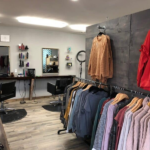
Photography in a clothing store

It’s tough for retail stores to fill the space near the ceiling, and any empty space makes a small town business look sparse. Solution: local photography display. Photo by Deb Brown
One square-foot retail
Beauty salons are natural business incubators. Salons always have other little businesses growing inside them because they have great foot traffic. This is an opportunity to do more with the same amount of space.
Probably the smallest pop-up I’ve seen is this stack of headbands, crafted by a local high school senior raising money for her mission trip. It fit into one square foot of the retail counter.

You don’t need much to start small. Even one square foot of space may be enough. Photo by Becky McCray.
The One Wall Bookstore
I love the one-wall bookstore idea! How many times have people said your town is too small for a bookstore? You’re not too small for anything if it only needs one wall!
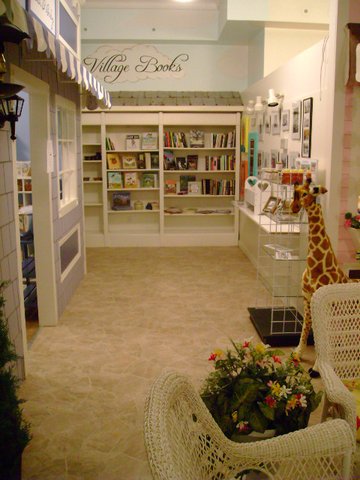
One wall of shelves made a flexible pop-up space inside The Village shops in Washington, Iowa. Photo by Cathy Lloyd
A building of tiny shops
Besides the one-wall kids’ bookshop, this building is divided into many different small retail shops.

Another one-wall bookstore, this time for kids books. Photo courtesy of Walker Mercantile, Woodward, Oklahoma
Local art and photography
Every local business (retail, service, office…) needs art on their walls. Every local artist needs to get in front of new customers. Put those together, and you have an amazingly easy local art project.

Coffee shop Gathering Grounds displays local art on the walls in Avon, Minnesota. Photo by Deb Brown
Fill just one shelf
A local hobby farm doesn’t need a full retail store for their goat milk products. One section of an endcap display in the local pharmacy may be just right.

This pharmacy obviously hosts a lot of different businesses. Photo by Deb Brown.
Start ’em young
Anyone with even a few products can display on a shelf. This high school student displayed insider their local salon.

High school student Rebecca has her own shelf of skin care products inside a local salon. Photo by Deb Brown.
Make a visual change from the host business
Use a different type of flooring, and it will look like a store-within-a-store. Don’t miss the rack of books by the local author.
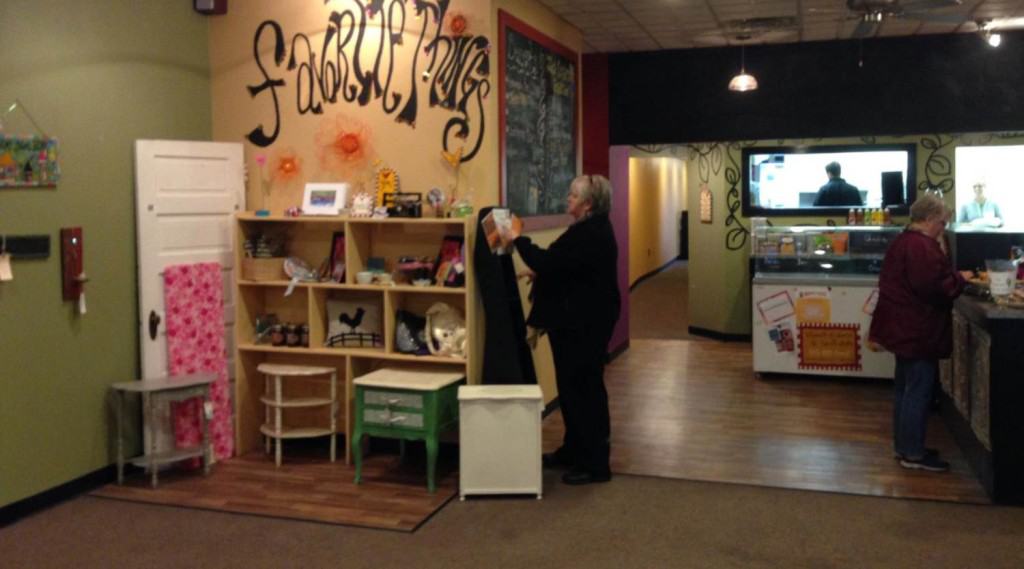
This bakery hosts a pop-up decor business tucked into a corner and a book rack from a local author, in Webster City, Iowa. Photo by Becky McCray.
Provide products that are hard to find locally
For resellers, consider products that aren’t offered anywhere else in your town, like hardware items.

Small towns double up: this aisle of the grocery store is a tiny hardware store. Photo by Deb Brown.
Fill every corner
Even lodging and B&Bs can host pop-ups.

I caught this tiny store inside a B&B where I was staying. There’s a variety of vintage items, paper goods and more. Photo by Becky McCray.
Add one shelving unit

Inside the Chickasaw Cultural Center, one shelving unit offers canned and packaged foods for sale. Photo by Becky McCray.
Divide a building and share

This clothier also has a full size coffee bar. Photo by Becky McCray.
Should I ask competitors before I start a business in a small town?
“I want to start up a new business in town which will compete with an existing one. I believe there are enough customers for both of us. Should I talk to the business owner about my intentions before I start?” That’s the real-world concern from a reader. In small towns, we think about things like […]
“I want to start up a new business in town which will compete with an existing one. I believe there are enough customers for both of us. Should I talk to the business owner about my intentions before I start?”
That’s the real-world concern from a reader. In small towns, we think about things like this. We don’t want to hurt anyone often because we know them, or we know their family.
I’ve never personally asked anyone when starting a potential competitive business or been asked by anyone (except my sister, but that’s a long story). While some people do get angry about it, I believe competition is a good thing, even in a small town. And I say that from personal experience in business.
I discussed this question with my colleague Deb Brown, a former chamber of commerce director and entrepreneur, to get additional ideas.
Generally, we don’t think it’s necessary to speak to them first. It’s also not out of the question, if you feel strongly about it because of the person involved, whether you know them, or the size of the town.
Test your idea first
The main advice Deb and I would offer is to do small tests first to gauge the market. That’s how you’ll know for sure if there is enough demand to support another business.
You can do this for a retail business through pop-ups, renting booths at festivals or events, or through tests selling a few items online or inside another business. For services, you can start offerings online, a mobile location like a trailer, or with a few temporary tests. Once you start those small steps, you’ll learn a lot about what people want to buy, what they’ll pay, and what they are hungry for.
You may find there isn’t demand, so you don’t have to go have that awkward conversation after all.
Look for opportunities to cooperate
Small businesses in small towns have more opportunity to cooperate. Even a direct competitor might cooperate with you. This makes for a much easier conversation than seeming to ask their permission to start. Instead, go to them with ideas for ways to work together.
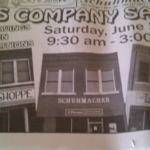
Here’s an example advertisement from three retail businesses, two of which are direct competitors. All three were along the same block in a downtown.
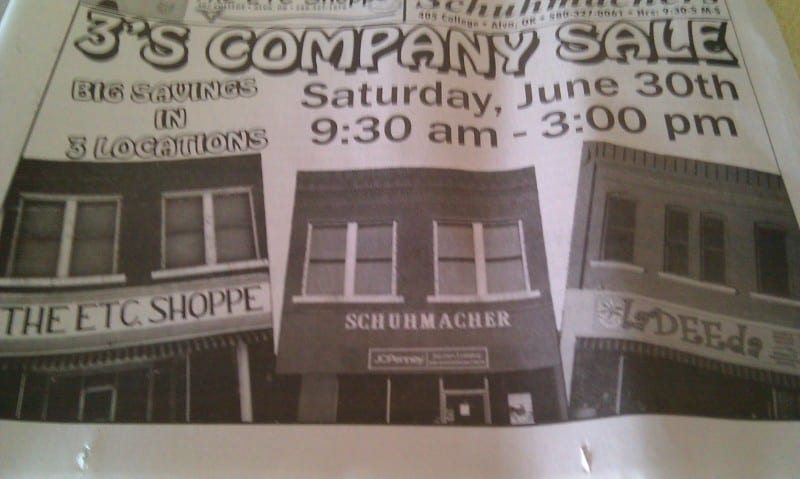
Three local stores cooperated on this joint ad, marketing their stores together. Photo by Becky McCray.
Ask your small town business questions here
Do you have a question about your small town business or business idea? Reach out on our personal contact form.
Archives
- March 2026
- February 2026
- January 2026
- November 2025
- October 2025
- June 2025
- April 2025
- March 2025
- February 2025
- December 2024
- October 2024
- September 2024
- August 2024
- June 2024
- May 2024
- April 2024
- March 2024
- January 2024
- December 2023
- November 2023
- October 2023
- September 2023
- August 2023
- July 2023
- June 2023
- May 2023